Wednesday, February 27, 2008

Rosenblum makes the Cut


Rebecca Rosenblum, the winner of the most recent Metcalf-Rooke Award, has just made the short-list for this year's $10,000 Journey Prize for her story, Chilly Girl. Congratulations! The other two contenders are Craig Boyko and Krista Foss. Go, Rebecca! She's deserving: her stories are that good!

She's also going to be on stage with recent Giller winner Elizabeth Hay in June at the University of Toronto. And in Peterborough next week for a panel on Canadian fiction. And all this without a book to call her own!

We'll soon remedy that!

Congratulations again, Rebecca.

Tuesday, February 26, 2008

Cold-cocked: the Blogger's Take & Flirt:The Interviews

After beating the traditional bushes to try and get some play, we sent review copies of Lorna Jackson's Cold-cocked: On Hockey to some of the leading hockey bloggers in the land. Over the last few weeks, several of these have posted reviews. They can be found by following the links below:

On Frozen Blog: http://www.onfrozenblog.com/2008/02/25/cold-cocked-is-a-hot-read/

Hockey Blog in Canada: http://hockey-blog-in-canada.blogspot.com/2008/02/tbc-cold-cocked-on-hockey.html

Scarlett Ice: scarlettice.blogspot.com/2008/02/scarlett-ice-library-cold-cocked-on.html

Untypical Girls: /untypicalgirls.wordpress.com/2008/02/16/book-review-cold-cocked-on-hockey/

Women's Sports Blog: ftlouie.typepad.com/womensports/2008/02/le-book-review.html

There were a couple of others I can't seem to locate right now, but i'll direct them to your attention later. More also quite likely to follow.

Lorna's next book, Flirt: The Interviews should come back from the printer within the next week. There's three hockey-related "interviews" in this collection -- Bobby Orr, Markus Naslund, and Janet Jones-Gretzky -- to go along with Ian Tyson, Alice Munro, Richard Ford, Michael Ondaatje and Benjamin Britten. "Interviews", in quotation marks, because they are, of course, fiction, or a pastiche of fiction, interview, news articles and biographies, and lord knows what else. It's the oddest book we'll be publishing this year, the hardest to define, and perhaps the most enjoyable. A collection of linked fictions in interview form conducted by a woman who would much rather tell her own story than listen to those of her famous subjects, by a woman who simply cannot stop talking about herself. Everything is about her, from Richard Ford's feelings about landscape and Bobby Orr's oft-injured knee, to Ian Tyson's lyrics, Alice Munro's motherhood, Markus Naslund's spirituality. Janet Gretzky's curves. Flirt might be a comic essay on adolescent grief. Or a comic essay on creativity. But perhaps its best to leave it as a collection of linked comic short fictions that mock real interviews and question the sort of information we often find in them.

As I said earlier, the pitching begins. And this is certainly one of our spring books that y'all should make sure you pick up. It's as much fun as you're likely to have between two covers. Which, alas, may say something about those of you who tune into this blog semi-regularly.

Monday, February 25, 2008

Upcoming Biblioasis Events

A couple of events to bring to your attention:

David Hickey will be reading this Thursday with Elizabeth Bachinsky (Nightwood Editions) at the Landon Branch of The London Public Library, 167 Wortley Road on Wednesday, February 27th at 7:30 pm.

And Stephen Henighan and Ondjaki will be touring Ontario and (hopefully) Montreal between March 10th and 22nd in support of Henighan's translation of Ondjaki's Good Morning Comrades. More details to follow as we have them, but here's what is lined up thus far:

–March 12, 2:30 PM, Visit to Portuguese Class, University of Toronto.
-March 12, 7:30 PM, English-language Reading, Harbourfront Centre, Toronto.
–March 13, 12:00 Noon, Bilingual reading, Brock University, St. Catharines, Ontario.
–March 15, 7:30 PM, Bilingual Reading, Collected Works Bookstore-CafĂ©, Ottawa, Ontario
–March 18, 2:30 PM, Bilingual reading, York University, Toronto.
–March 19: 1:30 PM, Bilingual Reading, University of Guelph, Ontario.

Friday, February 22, 2008

Sex, Literature and Video Tape

Someone at last week's Valentine's Day launch of Russell Smith's adult fairytale Diana: A Diary in the Second Person, has posted 5 minutes or so on YouTube, about the origins of Diana. You can watch it here: www.youtube.com/watch?v=PVg8PSbzLOU

Thursday, February 21, 2008

A Few Spring Covers


Early looks at a couple more of our Spring titles. Two of Spring '08's titles -- Russell Smith's pornographic fairy tale Diana: A Diary in the Second Person (#1 on amazon.ca's erotica lists at the moment (proof that smut(h) sells) -- part Story of O, part Molly Bloom, part Penthouse Letters (mainly Penthouse Letters) -- and Ondjaki's Good Morning Comrades (see below) are already out and available. Charles Foran's Join the Revolution, Comrade and Lorna Jackson's Flirt: the Interviews will be out April 1st; Stephen Henighan's A Report on the Afterlife of Culture min-April. The remaining list -- Patricia Young's Here Come the Moonbathers and the Zach Wells edited Jailbreaks: 99 Canadian Sonnets, will be coming out towards the end of April. I'll have you covers for them as soon as we're a touch closer to being satisfied.

Tuesday, February 19, 2008

Ondjaki's Good Morning Comrades


Ondjaki's Good Morning Comrades is available now, the second official title in the Biblioasis International Translation series. This is the first title by Ondjaki available in english, beating out Aflame Edition's The Whistler, from what I gather, by a matter of days. Translated by Stephen Henighan, who's also stepping in as General Editor for the series.

Looks like we'll be launching Good Morning Comrades at Harbourfront March 12th. Ondjaki's coming into Canada for a whirlwind tour that will include several Toronto appearance, Guelp, Brock and elsewhere. More details to follow.

You'll be seeing more Biblioasis translation titles beginning in 2009, as we hope to make translation a bigger part of our publishing program. We have Hans Eichner's Kahn & Engelmann lined up for spring '09; hopefully Horacio Castellanos Moya's Dances with Snakes in the Fall of '09. Also Goran Simic's next volume of poetry, The Tattooed Land. Lots of good stuff.

Speaking of translation, we're working on the next issue of CNQ, which will be focusing on translation. It's been a very difficult issue to assemble, though it's finally taking shape. Contributors include Mike Barnes, Alberto Manguel, Robyn Sarah, Steven Henighan, Goran Simic, Eric Ormsby and others. Also a few regular critical pieces, including a fabulous Giller Report by Alex Good.

So why haven't you subscribed? $14.00 won't even buy you a Danielle Steele paperback anymore, and we know how much that's worth. Come on: it'll make you feel smart. When's the last time that came so cheap?

Monday, February 18, 2008

Beyond the Blank Page

K.D. Miller may not be one of ours -- as in a Biblioasis author -- but she's one of mine, as in a writer I greatly admire. She has a new creative writing course, and I thought I'd post information about it here. Spread along to any who might be interested.


BEYOND THE BLANK PAGE

Do your plans for spring cleaning include dusting off a manuscript you put away months or years ago? Do you have a novel, memoir, play or film script, short story or poetry collection in the works? Could you use some positive, practical feedback? If so, you may want to sign up for "Beyond the Blank Page: A creative writing course to help you revise and revitalise your work-in-progress."
This six-week course will introduce you to a community of writers who, like you, have a work in progress. Come and share your writing, give and receive valuable commentary, and sharpen your self-editing skills.
When and Where: I will be teaching the course at Fairlawn Neighbourhood Centre (28 Fairlawn Ave. just a few steps west of Yonge St.) on the following Wednesday evenings from 7:30 till 9 pm: April 2, 9, 16, 23, 30 and May 7. The Centre is six blocks north of Lawrence subway station. Public parking is available just east of Yonge on Glenforest Ave.
Cost is $150.00 per person.
To register, phone the Centre at 416 - 488 - 3446 and ask about Course AE14

NOTE: Each participant is asked to submit to Fairlawn Neighbourhood Centre between 5 and 20 typed, double-spaced pages of their work-in-progress prior to the start of the course.

Please share this message with anyone else you think might be interested. Below my signature, I've pasted in the answers to some frequently asked questions.
Hope to see you there,
K. D. Miller
(416) 487-0966
kdmiller@sympatico.ca
Enjoy my books:
http://www.hips.com/kdmiller

BEYOND THE BLANK PAGE – Frequently Asked Questions

Q – I wasn’t able to take the first Blank Page course. Can I still take this one?

A – Yes. The only prerequisite for Beyond the Blank Page is to submit between 5 and 20 manuscript pages of your original, unpublished writing to Fairlawn Neighbourhood Centre prior to the first class, which will take place April 2, 2008. Your submission should be identified with your name, phone number and the words “Beyond the Blank Page.”

Q – What is meant by “manuscript page”?

A – 8 ½’ X 11”, typed, double-spaced, one side. The type should be clean, clear and legible, to allow for photocopying. Poets should allow one poem per page (length permitting.) Novelists or writers of other longer projects may submit a brief synopsis with their excerpt.

Q – What will a typical class involve?

A – A brief talk by the instructor on a topic related to revising and self-editing - characterization, structure, dialogue, etc. - followed by discussions of the writing of two of the participants. At the end of the class, copies of two more manuscripts will be handed out, for the next week’s discussion.

Q – Will people criticize my writing?

A – The class will have had a week to read and think about your submission. They will evaluate the strengths of your work, and offer constructive suggestions for making it stronger. You will have a chance to respond and ask for more specific feedback. At all times, the atmosphere will be courteous, supportive and professional. And remember – you will also be evaluating the work of your colleagues.

Q – What if I have more questions before the course starts?

A – You are welcome to contact the instructor, K.D. Miller, by e-mail: kdmiller@sympatico.ca or by phone: (416) 487-0966.

Sunday, February 17, 2008

Posting and Punditry

This space, for those handful of you who check in on occasion, has been quiet for awhile. After the first few weeks I began to receive queries about my well-being. Was I all right? Had something happened, or was I in any sort of trouble? Even one person who feared the silence indicative of something they had feared bound to happen: we'd bitten off too much and it had finally caught up with us. Blog silence as a sign of impending doom.

I'm happy to report that not only am I well, but that the press is no closer to collapse than it was a month ago. Nor, alas, is it any further away from it. My reasons for quitting Thirsty for awhile were both personal and professional. I've too little time any more and keeping up the chatter seemed not worth it. I decided it would be more beneficial to read a book if I had a half an hour to kill, to get back to reading for pleasure, something I've had a hard time doing over the last couple of years. So I sat down with Roth and Houellebecq and Arthur Krystal; Grant Buday, Cormac McCarthy, Arturo Perez-Reverte. Most recently, Charles Foran's Last House of Ulster. Reading these seemed much more worthwhile than sitting for yet another half an hour a day trying to keep a blog current. If you're actually reading this, I expect it is because you're one of the few who still care about books and good literature; if you're like me, you're finding it harder and harder to find time to get to the books you want to, to keep up to date on what's new and worth reading, to get to the stack of classics sitting on your shelves or piled next to the nightstand. In my own case, the volumes of Clive James, including his latest, Cultural Amnesia, which I picked up this past week in Toronto; Bolano's Savage Detectives, Casares's Invention of Morel, The Best Canadian Stories and Journey Prize anthologies. This blog meant that I had that much less time to read, to remind myself why the hell I spend the time I do behind this computer in the first place. We'd all do better to spend less time with blogs, more time with books, so taking a break seemed a way to deal with this.

But it was more than that. When I started this blog it was the hope that it would be a press blog, with all of Biblioasis' many talented writers contributing. That lasted for about two weeks. It became a publisher's blog, news, reviews, views. I've been told, more than once, that it quickly developed into the best example of its kind in the country, which says more about how poor the rest must be than how good this one was. But the rule of blogging is that new content is essential. If you can't keep people coming back, there's no point doing it at all. So I tried to post regularly, every day for a while, and then at least several times a week. I posted reviews, announcements, the odd poem, editorial, rant. Some were good, some I later regretted. Some were posted in anger and frustration, and caused problems I'd not foreseen. One, unintentionally, caused a person a fair amount of embarrassment and pain. I became a touch careless, not checking up on things as I should, got in the habit of commenting on things in a way that, had I stopped for a few minutes, I probably wouldn't have. In my search for content and commentary, in my attempts to keep things fresh, I posted about things best kept a bit more under wraps. I began to feel less a publisher where this blog was concerned and more a pundit.

This focus on the new is part of the problem. It's a cliche to say that literature is not about the new. But in publishing, in literary publishing, it's getting damned hard to talk about anything else. It's hard to get anyone to even consider covering/reviewing/discussing a book that's even a couple of months old. Want to try and get a writer from last spring a few gigs in April? Forget it. Here we are, February, the Spring 2008 season hardly even begun, and I need to have all my covers and catalogue copy and everything else to my US distributor for Fall by tomorrow evening; to our Canadian sales force in less than two weeks. At the same time, books that were ordered 45, 60, 90 days ago are already being returned to the warehouse. The preparation for a season's titles begins earlier and earlier; the actual selling season seems shorter and shorter. And no one any longer is interested in backlist. The fact that Leon Rooke's Hitting the Charts remains one of the most important books we've published -- and are likely to for many a year -- is irrelevant. A master's selected stories, stories which, in the words of Russell Banks, "work out there in the terra incognita, mapping limits" and hardly anyone has read it; and now that it is backlist, relegated to the amazonian 3-5 weeks, unavailable on bookstore shelves across the land for the casual browser to trip upon, t'is unlikely anyone will. How many out there will find David Hickey's In the Lights of a Midnight Plow now? Eric Ormsby's Time's Covenant? Goran Simic's From Sarajevo With Sorrow? Pray for a course list, as it's the only chance of a book having a meaningful afterlife, and in the age of the coursepak even this is damn remote. No, alas. Rather, let's talk about what's new.

So I thought, in some sort of strange, tangential, way, this blog might be contributing to the problem. Punditry, by focusing on the new, on keeping the content fresh as opposed to the quality of it. Not sure that makes any sense at all, but t'was my thinking.

Anyway: I'm back at it again. New books to push, new frustrations to share. Though, as this semi-coherent rant has already taken much too much time, perhaps I should leave it here.

Cultural Amnesia. Clive James' volume, sitting an arm's length away. Says it all, really. Perhaps when I finish General Ludd -- perhaps a future Renditions book (the pitching begins) -- I'll pick up there.

Monday, February 04, 2008

Valentine's Day Launch at the Gladstone Hotel : 7 pm

Russell Smith - Diana: A Diary In The Second Person

The pornographic novel that the Globe & Mail's Russell Smith published ten years ago under the pseudonym Diana Savage is a notorious text which, till now, has been increasingly difficult to find. To launch a revised literary edition of Diana: A Diary In The Second Person (Biblioasis), Smith will have a frisky Valentines Day conversation with renowned sex columnist Josey Vogels about the voice as an instrument of seduction and other matters of the heart. — A This Is Not A Reading Series event presented by Pages Books & Magazines, Biblioasis and
EYE WEEKLY.

Gladstone Hotel Gallery, 1214 Queen St W, Toronto
Thurs, Feb 14; 7:30pm (doors 7pm) free

Monday, January 07, 2008

No Sacrifice Too Great

Sunday's Toronto Star carried a farewell by Philip Marchand, who is changing beats at the Star, from book reviewer to film critic. He'll be missed. The best book reviewer in the country for nearly 20 years, you could count on Marchand to give you an honest appraisal of the books he was reviewing. "Be just to a book, by all means," Marchand writes, "is the credo of a book reviewer, but more important, be just to the reader." Too few seem capable of doing this, or understanding it when they see it.

One of Marchand's last pieces of book criticism, it would seem, appears in the current issue of CNQ. His 'The Problem with Alice Munro' is worth a gander, and has already generated some interesting reader response. Marchand would have it, I'm certain, no other way.

Marchand's entire farewell can be found here: www.thestar.com/article/291298

Here Come the Moonbathers

Poet Laureate John Steffler has published Patricia Young's poem Melt, from her upcoming Spring Biblioasis collection Here Come the Moonbathers -- her first poetry collection in over 8 years -- as the poem of the week of the Poet Laureate website. The website can be found here:

www.parl.gc.ca/Information/about/people/poet/index.asp?lang=e&param=4&id=1&id3=1

And here is Patricia's poem:

MELT

by Patricia Young

“We can’t even describe what we’re seeing.”
Chair of the Inuit Circumpolar conference.

One morning they appear in nameless droves.
Fabulous creatures flicking their silver fins and ancient jewels.

A long lost mythology? Weird migration?
They lurched onto the tundra like bawling infants,

announced themselves with the subtlety of a brass band.
Wave upon wave, antlers vibrating, tails ablaze.

Who? we asked. Who are you?
One day they weren’t there and the next

they were traveling toward us
with the speed of a birchwood forest.

We gathered to mourn those passing
swiftly into memory, the polar bear and arctic seal.

Time cracked.
The century was thinner than ice.

We had 1200 words for reindeer but not one
for hornet, robin, elk, salmon, barn owl.

Try to understand: we had never seen a barn.
Never stepped into such a cavernous space.

*

We have never stepped into a cavernous space.
Try to understand: we have never seen a barn.

Hornet, robin, elk, salmon, barn owl.
We have 1200 words for reindeer but not one

for a century thinner than ice.
Time cracks.

Swiftly into memory: the polar bear and arctic seal.
We gather to mourn those passing

with the speed of a birchwood forest,
the new ones travelling toward us.

One day they aren’t here and the next
we ask, Who? Who are you?

Wave upon wave, antlers vibrating, tails ablaze.
They announce themselves with the subtlety of a brass band,

lurch onto the tundra like bawling infants.
A long lost mythology? Weird migration?

Fabulous creatures flicking their silver fins and ancient jewels
appear one morning in nameless droves.

Saturday, January 05, 2008

Prose for Puck Heads

Lorna Jackson's Cold-cocked was reviewed in the Globe this morn. It's part of a much longer review of 4-5 hockey books, so I'll just cut and paste what Steve Galloway said of Cold-cocked. This is the 3rd piece on Lorna's book in 8 days.: each of 'em said it's a book you should damn well read. So, if I haven't convinced you yet, perhaps Mr. Galloway will.

The review...

I am currently getting my lunch handed to me in a writers' hockey pool. If all my players were to double their point production, I'd still be a long way from contention. It's humiliating. And, in the interests of full disclosure, one of those who is metaphorically pantsing me is Lorna Jackson. I will exact revenge. But not here. Jackson's memoir, Cold-cocked: On Hockey, is fantastic. The only book of the five in which the writing is more than a delivery mechanism, Cold-cocked is sardonic, heartfelt, angry and passionate about hockey, life, the points where they intersect and the points where they don't.

In one of my favourite passages, Jackson offers what some of the secondary characters in the book would do during a day with Todd Bertuzzi, vilified for a vicious on-ice attack on Steve Moore. From Carla Funk: "I'd take him to a watercolour lesson ... go to a poetry reading ... bake bread. But then I'd want to see some of that aggression, so I would get him to butcher some chickens, too."

From FUKT (the hockey pool code name of writer Bill Gaston): "I have a garage that really needs cleaning out, plus I'd want to see how many sandwiches he could eat. During his break, I'd get him to see if he could throw my old couch up on a neighbour I don't like's roof."

The notion of Bertuzzi painting a happy little green tree next to a frisky lake or eating a dozen ham sandwiches is both funny and sad. Could it be that these players are human beings, sort of? Though we all know this objectively to be true, we're generally more comfortable either deifying them or reducing them to racehorses. But in the same breath, let's face it, if you need to kick a little ass, it'd be nice to have a guy like Bertuzzi doing your bidding.

In other moments, Cold-cocked is deadly serious, pressing and urgent about a game that Jackson, unlike most authors of hockey books, pays her own money to watch. She's an outsider, like us, and her book should serve as a reminder that it is the fans, not the players or the media or the league itself, that own this game and will determine its fate.

Thursday, January 03, 2008

Bookangst

An interesting post was sent to me today by a fellow publisher I thought I should share. It's a post by what appears to be a prominent-though-incognito New York editor in discussion with other editors about editing and marketing, and what authors can expect of a publisher (as well as what publishers may expect of authors). It's for writers they deem mid-list -- those with print-runs in the 7500-15000 range (imagine, if you will, the sound of one Canadian publisher choking). Still, interesting and worth reading.

I couldn't link directly to this post, but go here: bookangst.blogspot.com/2004_11_01_archive.html

and scroll down to the post of November 6th, 2004.

Oh yes: happy new year.

Monday, December 31, 2007

The Anti-Cherry: An Inimitable Look at our Sport

Roy MacGregor in this morn's Globe and Mail writes about Lorna Jackson's Cold-cocked: On Hockey. Not in the book sections, boys and girls, but on page A2 of our national paper. As if this book might actually be newsworthy.

It's too long to type in, and the Globe has pulled its Globe Insider Pay-per-View trick, but for those of you who have access it can be found here:

www.theglobeandmail.com/servlet/Page/document/v5/content/subscribe?user_URL=http://www.theglobeandmail.com%2Fservlet%2Fstory%2FLAC.20071231.MACGREGOR31%2FTPStory%2F%3Fquery%3Dcold-cocked&ord=919614&brand=theglobeandmail&force_login=true


For those of you who don't, here a sampling of what Roy says of Lorna and her book:

AN INIMITABLE LOOK AT OUR SPORT

"The anti-Cherry is alive and well and living on the west Coast. She is a shepherd who names her sheep after hockey players ... And she knows her hockey. ... {Cold-cocked} may be the most unusual book ever written on the game ... a book that stretches from medieval literature ... to pop culture. "

Friday, December 28, 2007

Jackson, Hockey, & the holidays

I've been taking a bit of time off this past week, but thought I'd check in on a few things before heading off to the show this afternoon: No Country For Old Men, pairing perhaps my favourite directors in the Coen Bros. with one of my favourite novelists, Cormac McCarthy. All indications are it will be fabulous. One of the things I checked in on was Lorna Jackson's blog, Cold-cocked, where I discovered a few recent posts. I've pasted in the most recent below, though another excellent post can be found here:

//lornaj.blogspot.com/2007/12/captain-emos-wrister.html

Here's her post from yesterday. And, incidentally, Lorna will be nationwide on Sounds Like Canada with Shelagh Rogers January 9th.

The winter solstice brings back the light, sure, and not a moment too soon. It also brings lots of salt and butter and crabbiness and, phew, World Junior Hockey from far away lands.

Yesterday against the Czechs and this morning versus Slovakia—the wee nation that has already given us Hossas, two magic Marians, a pre-concussion Richard Zednik—the Canadians were snoozy and robotic. Great (fascistic) coaching is one thing, and “yay, we win again!” but must our junior tourny teams all play the same way and look like table hockey on big ice? Positionally sound, okay, but also predictable and machine-steady. Blame the salt and butter, but I nodded off—this was before 8 o’clock in BC, home of Kyle Turris—during the first two periods.

Hans Ulrich Gumbrecht teaches the aesthetics of sport at Stanford and is the author of the neat little book, In Praise of Athletic Beauty. He's an egghead, sure, but Gumbrecht talks about how the greatest pleasure in sport (or in art), why we watch and cheer, is when the unexpected happens. Seems kinda duh put that way, but I like how it explains that faster heartbeat and instant call to attention when a mistake happens on ice, or a spasm of uncontrolled creativity. This morning, Drew Doughty (great name for a Canadian, or in the case of westcoasters, Self-Doughty) decided to spinorama in the neutral zone when we all thought (cause we know the game's usual rhythms and patterns) he was going to retreat and regroup. He’s long practised that move and apparently had been told by coaches to tone down such hotdoggery for this tournament, to take fewer chances. Even before the move led to the Turris goal, it was thrilling to see the game stop in its tracks and to watch imagination and spark—things we value in all teenagers—squeeze the game off those tracks and send it bumping and grinding toward the net.

So far, things seem controlled and interesting and maybe we’ve moved beyond this as a nation (since the Super Series last year and the ’72 series before it) but: please. I don’t want to see the Canadians headshot the other team’s best forward so he can’t play, possibly ever again.

And speaking of spinoramas: anyone remotely interested in Canadian sports writing should be sad that John Burns has announced he will soon be leaving the Georgia Straight. Over the last ten years, Burnsie has always let me review the sports books I wanted to, has always given sports writing a place to be considered and criticized as legitimate cultural commentary and as literature. During the writing of Cold-cocked: On Hockey (and also my forthcoming book, Flirt: The Interviews), he listened, cared, encouraged and let me read and review many of the books that informed my take on hockey and how we feel, read and write the game. Let’s hope he’s not feeling too Self-Doughty and knows that extreme change (aka “the old spinorama”) is truly the only way to become better and more.

Monday, December 24, 2007

Merry Christmas!

Off for the holidays. Going to try and take a week more-or-less off here at maison Biblioasis, so there's unlikely to be any additional posts until the new year. Best wishes to all!

Amazon, continued...

The last amazon post I made -- see below -- got picked up by a Pete Cattlin on a blog called Optimizing Amazon. It can be found here:

//optizon.blogspot.com/2007/12/understanding-amazon-on-site.html

We've started a bit of a discussion about amazon and various issues and practices which may be of interest to some of you. I've already learned a fair bit from the exchange. Some of you other publishers, in particular, might have other thoughts about all things amazon, and it would be great to have you air them. It's not often you get the ear of someone associated with the company who's willing to discuss things with you in a knowledgeable, reasonable fashion, though Pete seems happy to do so. There's also some other good information regarding bibliographic data and other issues, so the site itself might be worth a gander.

Thursday, December 20, 2007

Why I Still Loathe Amazon

I received a Google Alert this morning, that I thought I'd pass along. It's taken from a amazon.com customer's blog, a bibliophile from Houston, Texas. It provides further evidence of what I was complaining about regarding amazon practices in a long post a month or so ago.

The book in question, Eric Ormsby's Time's Covenant, is, of course, still in print, and still readily available through our distributor, and to amazon, if I understand things correctly, through Baker & Taylor, just as it always has been. Baker & Taylor continues to order our books. Yet amazon has sent an email to a customer, once again, saying that the book is not available.

The general rule of thumb about these things is that for every instance you hear about, another 20 or so are not mentioned in any public way. This year, I've been told of at least a half dozen separate occasions where amazon -- or amazon.ca -- has canceled existing orders for our books when the books are available. I also know of weeks-on-end where the books have been listed as unavailable, where it wasn't even possible to PLACE an order. How much, in the end, has this cost our press? How much other small presses?

Amazon has done a wonderful job of promoting themselves as being the one-stop place for books. If it's available, they'll get it for you. But that's simply not true. But the fact that they send these notices to their customers which can only serve to dissuade them from looking for it elsewhere -- I mean, if amazon.com can't get it, who can? -- is a seriously problem, and something that needs to be addressed.

As of April, 2008, Biblioasis titles will be represented and distributed by Northwestern University Press in the US and abroad: perhaps this will solve much of this problem. But it is, still, incredibly frustrating. At our level of operation, every sale matters: thankfully this reader wanted the book badly enough to have looked elsewhere. But it would be foolish enough to assume most would show the same level of tenacity.

The post...

Two weeks ago I placed an order for three books, among them a volume I wished to give as a Christmas present, with Amazon.com. A prompt e-mail informed me my books would not be delivered until late in January, so I cancelled the book intended as a gift and bought it from a chain bookstore in Houston. On Wednesday I received another e-mail from Amazon.com saying one of the books I had ordered for myself, Time's Covenant: Selected Poems, by Eric Ormsby, could not be shipped:

“Though we had expected to be able to send this item to you, we've since found that it is not available from any of our sources at this time. We realize this is disappointing news to hear, and we apologize for the inconvenience we have caused you.”

“Disappointing,” yes, but also baffling. Time’s Covenant was published in October 2006 by Biblioasis, of Windsor, Ontario, Canada – that is, south of Detroit, in a much-touted era of free trade and globalization. It remains in print. Ormsby is an American and long-time resident of Canada now living in London. He is also among our finest living poets. I reordered his book from Amazon.ca (the Canadian cousin), and they expect to ship it between Jan. 16 and Jan. 30.

Monday, December 17, 2007

WANTED: Web Editor

We here at Biblioasis are looking for a web editor to help run both the press and magazine (CNQ: Canadian Notes & Queries) websites. Especially the latter. We've tried to maintain it, but, hey, we're simple book people, and it's time we face up to that fact. Luddites-R-Us. There was a time we were proud of of our luddite-status, flaunted it even, but it's beginning to be a major inconvenience.

If anyone is interested, please contact us at biblioasis@yahoo.com. We've scraped away the remaining change from the bottom of our kids' Value Village piggy bank, so it's even a paying gig of sorts. But more importantly, for all of you suicidal death-wish types who still entertain hopes of working in the glamorous world of Canadian publishing (cough, hack), think how it will look on your resume!

Saturday, December 15, 2007

Rebecca Rosenblum & the Journey Prize Anthology

Scanning the online version of the Globe this morning, I found a review of the current Journey Prize Anthology. Biblioasis has three authors in the current collection: Patricia Robertson, for a story from her current The Goldfish Dancer; a story by Grant Buday, shortlisted for the Metcalf-Rooke Award for his fine novel Dragonflies (and recently signed onto the good ship Biblioasis), and Metcalf-Rooke Award winner Rebecca Rosenblum.

Rebecca's story comes in for some praiseworthy treatment from the Globe's reviewer. See below. Congrats, Rebecca.

It's unclear whether the main character of Rebecca Rosenblum's postmodern Cinderella aspires to escape her chilly existence, but until a party in an air-conditioned condo, Emmy holds herself so far apart from others that she is physically as well as figuratively cold. Rosenblum employs the language and rhythm of fairy tales to lend the Chilly Girl its gravity, and the choice is apt; the exchange of innocence for experience is one of the oldest stories. But unlike the other stories in this collection, Emmy's gain isn't wisdom tinged with loss, but wisdom rife with possibility. This is only one of the ways that Rosenblum subverts expectation in this diamond-sharp story. Besides making the cut for the anthology, Chilly Girl is also her first published story. Wow!

Friday, December 14, 2007

Back ...etc.

It's been a long week, trying to catch up on the backlog caused by my Toronto trip for Sales Conference. Nose to the grindstone sorts of things: author touring and promotion grants and reports, finalizing two books for the printer, launches, promotion, correspondence, readying contracts, and a host of small but important administrative tasks which make for less-than-stellar reading.

Pleased to see Stephen Henighan's speech about translation posted early last week getting so much good attention. It's a fine speech, and the various links to it seems to have spread word about Biblioasis' International Translation Series -- and Kapuscinski's I Wrote Stone -- much better than I would have hoped. It's been our hope to spread word into the States with this, as we know there will be more interest in our series there than there will be in Canada -- though why this is the case I'm still not at all sure -- and this seems to be happening. There's even been some online buzz in the last week or so concerning Ondjaki's Good Morning Comrades, the second official title in the series, due out in February. Oh, the wonders of the web...

I Wrote Stone is close to becoming our best-selling poetry title, due in part to the several hundred U.S. wholesaler orders we've received over the last month. The good thing about these is that most -- if not all -- will not be returned. It's also picked up online, and as of yesterday was sitting close to a 1000 overall on amazon.ca, and was listed as 3rd overall -- after Dante and Neruda -- under continental European poetry. Not a bad start.

Saturday, December 08, 2007

The Big Smoke

In Toronto, where we're finishing up with the LPG Sales Conference and SGM. Four days in the big city and nary a minute to go explore. I'd hoped to be able to manage a quick tour of a few more galleries, or hit a couple of bookstores -- check out Ben McNally's and see how many Biblioasis titles are on the shelves. Spend some time with a couple of friends. But it doesn't seem likely to happen.

Though it's been nice to get together with Kitty Lewis from Brick Books, and Ruth Linka from Brindle & Glass, Simon Dardick from Vehicule, Kitty Lewis from Brick Books, Brian Kaufman from Anvil. Many others. Meet with the sales force and the support staff and the rest of the LPG board. It's nice to have that reminder that there are others out there who've been through what you're going through, and likely much more; to spend a few hours with people who are as passionately devoted to what they are doing as this group is. There are times it's pretty hard not to be cynical, but this is not one of them.

Monday, December 03, 2007

Stephen Henighan on Translation

Stephen Henighan, as the editor of the Biblioasis International Translation Series, acted as host for the launch of Ryszard Kapuscinski's I Wrote Stone on Friday, November 23rd at This Aint's the Rosedale Library. His introduction on the importance of translation was very well received, and he's agreed to let me post it here.


INTRODUCTION TO THE LAUNCH OF RYSZARD KAPUSCINSKI’S I WROTE STONE AND THE BIBLIOASIS TRANSLATION SERIES.
This Ain’t the Rosedale Public Library
November 23, 2007

Stephen Henighan

Good evening! Dobry wieczĂłr!

Welcome to the launch of Ryszard Kapuscinski’s I Wrote Stone, which is also the launch of the Biblioasis Translation Series.

This is both an evening in which to celebrate and an evening in which to remember.

It’s an evening to remember because, of course, we had hoped that Ryszard Kapuscinski would be here with us this evening. Tonight, as Biblioasis sets out on the path of a new translation series, we take the opportunity to honour a Polish writer who died earlier this year.

But we also honour the political and aesthetic act of literary translation because it is through translation that most of us discovered the magnificent writing of Ryszard Kapuscinski. As many of us are aware, in 1958 Kapuscinski went to Ghana to cover Africa for the Polish Press Agency. Over the next four decades he developed into the world’s most original and literary foreign correspondent. A simple reporter became a writer of layered, metaphorical depths with an unerring eye for terrifying details. These details leapt to life in part because Kapuscinski was not simply another stringer for the BBC or CBS. As a Pole, he looked on Africa with the eye of a man whose own country had descended into violence in his childhood; among the legions of foreign reporters describing refugees in Africa, Kapuscinski may have been the only one who had himself been a refugee.

Over four decades in Africa, Asia and Latin America, Kapuscinski witnessed 27 military coups. He was jailed on a number of occasions. He was sentenced to death four times, but always escaped. He wrote books about Emperor Haile Selassie of Ethiopia, The Shah of Iran, The Soccer War between El Salvador and Honduras, the collapse of the Soviet Union and the birth of independent Angola. These books have been published in 31 countries, almost always in translation. Indeed, I’m certain that many of us here tonight discovered Kapuscinski’s writing by reading English translations of his articles in Granta magazine. Personally, I remember wincing, white-knuckled, each time Kapuscinski rammed another burning roadblock in Togo or talked his way out of a dungeon where he was awaiting execution.

What none of us knew, of course, was that the swashbuckling reporter and daring prose stylist was also a poet. Only when Diana Kuprel and Marek Kusiba brought us a manuscript of their translations of Kapuscinski’s poetry did we become aware of this side of his literary career, which was little known outside Poland. Tonight, therefore, we’re delighted to be launching only the second-book-length translation ever of Kapuscinski’s poetry.

Diana Kuprel is going to speak about Kapuscinski’s relationship with translation, the act that made it possible for people all over the world to imbibe a Polish writer’s vision of Africa, the act which meant that at least one of the outsiders writing about Africa wasn’t from a country that had formerly colonized Africa, such as Britain or France, or a country that was aspiring to colonize it, such as the United States (and today we would have to add China).

Before Diana speaks about Kapuscinski and translation, I’d like to talk about Biblioasis and translation.

Biblioasis is a literary press run by Dan Wells out of his home office in Emeryville, Ontario, just outside Windsor. Biblioasis publishes ten or twelve books a year of Canadian fiction, poetry and literary essays. In 2005 Biblioasis published a book of stories called Yesterday’s People by a Canadian writer named Goran Simic. Since Goran’s first language is Bosnian, or the Bosnian version of the Serbo-Croatian, depending on how you want to frame it, these stories had to be rendered into English, a job that was done partly by Goran himself, partly by Dan Wells and partly by other people. These stories about life in Sarajevo during the war in former Yugoslavia are the first work of translated fiction published by Biblioasis, even though no translator’s name appears on the title page.

This experience got Dan thinking. At the same time, that Dan was thinking about translation, I was growing more and more frustrated with the sheer quantities of great writers who were translated from their own languages into other languages, often into four or five other languages, but whose work was not available in English. Because, alas, our vision of globalization is too often that globalization means that everything of importance happens in English. This attitude, in combination with certain pernicious trends in the publishing and book selling industry, means that less and less gets translated into English these days. Of the 100 best-selling paperbacks in the United Kingdom in 2004, only two were translations. Every day we hear of the importance of China, yet how many of us have read a Chinese novel? Brazilian, Indian and contemporary Arabic writing remain enigmas. Even as the United States and Latin America grow more and more integrated, younger Latin American writers are failing to get published in translation in the U.S. as the older generations, to which Gabriel GarcĂ­a Márquez and Isabel Allende belonged, were published. Now that Central and Eastern Europe no longer supply us with politically useful dissidents, we have ceased to translate the region’s literature, as we did in the 1980s. No longer do English-Canadian undergraduates regard translations of Martie-Claire Blais novels as vital reading, as many did in the 1970s, nor do young English-speaking readers elsewhere receive substantial exposure to current French-language fiction from Europe, Africa or the Caribbean.

All this means that English-language prose is less innovative than it used to be. Writers in most cultures read in several languages; their engagement with their own language is nourished by their experience of delving into the literatures of other languages. Major writers in other traditions, such as Jorge Luis Borges in Argentina, or Javier MarĂ­as in Spain, or J.M. Coetzee in South Africa (now in Australia) or Haruki Murakami in Japan, are also prolific translators. This is not true in North Atlantic Anglophone culture. The monolingual writer is a postmodern, Anglo-American invention. Try to imagine Jane Urquhart or Barbara Gowdy or Douglas Coupland or Guy Vanderhaeghe undertaking a literary translation. The image is almost surreal; this simply isn’t the way in which our writers approach literature. In ages prior to ours, when all writers, by definition, were multilingual, literature’s nature as an entity whose lustre was burnished by the fretting-together of different linguistic strands was so obvious that it did not need to be stated.
.
Since our writers are not translators, and since no reader, in any event, can hope to learn very many languages well enough to read their literature, we need translation.

The lifeblood of our literary culture depends on it. Literary movements gain fresh life through translation. Think of the most influential reading trends of the twentieth century: 19th century Russian fiction in the 1930s and 1940s, French existentialism in the 1950s and 1960s, Latin American magic realism in the 1970s and 1980s. All exercised a powerful influence on English-language prose, and all were made possible by literary translation.

When Dan Wells and I met and shared our preoccupations and decided to found the Biblioasis Translation Series, we agreed that we were looking for a kind of specificity that acknowledged a work of literature as a product of a place and a time, that acknowledged it as a creation of a particular translator grappling with a particular book in a particular context. For that reason, just as Ryszard Kapuscinski did not hide his identity as a Polish reporter in Africa, we decided that we would not hide the fact that ours were Canadian translations of world literature, and that a Canadian translation is just as legitimate and original and engaging as an American or British translation, and may be even more essential than those translations because it is bound to diverge in some respects from the assumptions of those more powerful cultures.

In contrast to some publishers these days, we decided that we were not going to hide the fact that our translations were translations. We were not going to hide the translator’s name, or banish it from the front cover. On the contrary, we would boast about our translators, just as Avon Books used to boast about Gregory Rabassa’s prowess in translating Latin American literature during the 1970s, or Penguin Classics boasted of David Margashack’s ability to render Dostoyevsky into 20th century English in the 1950s. We would recognize that translation is the most intense form of engagement with literary language that exists, an endless sifting and sieving of words for the kernels of their meanings, an improvisation which is never finished and is never satisfactory but which yields the miraculous act of transporting one culture into the realm of another, of causing the collisions of words and genres and concepts and histories and passions and fantasies which fissures and hybridizes literatures and yields new forms.

At the most simple level, translated literature opens up the world. Let me close with one very obvious example of this. The second book in the Biblioasis Translation Series is going to be the novel Good Morning Comrades by the young Angolan writer Ondjaki. I never would have got interested in Angola, I never would have travelled to southern Africa and met Ondjaki, had I not read an exquisite description of the first week of Angolan independence in a book called Another Day of Life by a Polish writer named Ryszard Kapuscinski. That book was made available to me by translation, and in turn we will soon be making an Angolan writer available to readers in Canada by way of translation. That Angolan novel is, in part, about Angola’s relations with Cuba. In addition to providing readers in Canada with a different view of Africa, it will provide them with a fresh perspective on Cuba. Beware! Translation is dangerous! Every act of translation connects part of the world to another part in a way we never could have expected; and this connection makes possible another connection, which makes possible another connection which in turn will make possible other connections in the future, and this web of connections is called culture, and it cannot exist without translation.

Thank you. Dziekuje bardzo.

Sunday, December 02, 2007

The Globe 100 (Plus)

Almost in spite of myself, I've been looking forward the last few weeks to seeing the Globe 100. It's been a good year for Biblioasis in the Globe: counting the paperbacks section, eight of our titles have been reviewed in the Globe since May. Three of these -- the review of Helwig's Saltsea, Ormsby's Time's Covenant and Metcalf's Shut Up He Explained, have been raves. So I felt fairly confident that Biblioasis would rate a mention this year, and hopefully, for the first time, might receive a multiple inclusion. I wasn't counting on it, but I thought it a distinct possibility. So when I picked up my morning Globe at the corner store and flipped to the Books section to see the Globe 100 listing, I let the car idle for a few minutes in the parking lot and quickly flipped through the listings to see what I'd find.

What I found was that Biblioasis did not this year merit a mention. I put the car in drive and headed on home.

I'm not going to lie to you: I was a bit disappointed. I've just finished writing my first Canada Council Block Grant this past week, and I could have used the pick-me-up. Grant writing, I've discovered over the last few years, is one of the primary functions of a Canadian publisher; though I'm now writing about 10 -12 a year between press and magazine, they don't seem to get any easier. I find the whole experience both depressing, frustrating and exhausting. As I've said elsewhere, there are times I feel more like a minor functionary in the literary bureaucracy than a publisher, and this week -- paring down my contribution to Canadian literature, my artistic vision and editorial excellence, my management and 3-5 year plan to approximately 1500 words -- I was feeling particularly bureaucratized.

But it's also not Martin Levin's job to give me a timely pick-me-up. It's his job, in this section, to list the 100+ books he and his crew considered among the best of 2007, and if Biblioasis titles couldn't crack that line-up, in their opinion, than they shouldn't be there. I might respectfully disagree -- and, trust me, I do -- but that's about as far as it goes.

I read Martin Levin's Shelf Life piece when I got home. It was quite similar to other Globe 100 Levin apologies, and no doubt absolutely true. "Rest assured, your editors have agonized -- I do not exaggerate; the pain is physical -- in winnowing the year's best to a mere fivescore. This involves a combination of gut-wrenching triage, tearful callousness, second-guesses and regrets." But then he goes on to give an example: "Have we given small presses their due? This year, I would say: Probably not."

I went back and did a count. Of the 26 titles listed in the Canadian fiction section, exactly two -- both from Cormorant -- merited mention. (I did not include Anansi in this total.) 3 of the 5 First Fictions were from "small" presses, bringing the total to 5 of 31. 2 of 5 poetry titles were from "small" presses. 2 of 50 nonfiction inclusions. Of these sections, then, 7 of 86 titles were from, quote-unquote, small presses.

So: what's my point? Not what you may think. This showing may or may not be poor. After all, the larger Canadian presses or conglomerates publish more titles, by bigger names, and are more regularly reviewed; and then a substantial number of the best books, quite reasonably, weren't Canadian at all. So for Canadian "small" presses to publish 7 of the top 100 -- or 100+ -- titles reviewed in the Globe from all books published in english seems to me to be pretty wonderful. If this is, indeed, what all of this pointless math means.

What sticks in my craw a bit is what seems to me the underlying assumption of Levin's example. It suggests that quote-unquote small presses operate on some different, likely lesser, level. That the criteria used to judge a book published by a smaller house is not the same -- and may need a touch more generosity -- than that of the larger presses. We're the country cousins and provincials who don't know what all the silverware is for and drink from the finger bowl. I fear it indicative of some belief that quote-unquote small presses need to be, in some fashion, propped up. That their best books can't stand up on their own.

It all reminds me of what a professor of mine said to me a few years ago when I told her that I was turning Biblioasis into a press. This woman is one of the leading scholars of book publishing in the country, a specialist in Victorian book publishing with several excellent histories to her credit. She smiled at me and said that that was very nice, but what I was setting out to do was not real publishing. It was more self-publishing, or hobby publishing. Nice and quaint and enthusiastic and commendable, she hinted, but not to be confused with the real thing.

This has been a motivating burr ever since. And I fear that the same somewhat muted if more well-intended impulse may lay at the heart of Levin's example.

This is not to ignore the obvious differences between Biblioasis and Coach House and Cormorant and Gaspereau, on the one side, and M&S and Random House and Douglas & McIntyre on the other. The latter obviously pay larger advances (& therefore attract more recognizable names), have larger marketing budgets, and have in-house designers. But when it comes to judging the books themselves, and especially the best of them, I think the differences between the big houses and the small houses largely evaporate. The best books produced by Coach House and Cormorant and Gapereau and Porcupine's Quill and Vehicule (& hopefully Biblioasis) show the same attention to detail, are chosen with as much care, and are as well edited, as well designed and produced, as books published by the larger houses. I would argue, in fact, occasionally moreso. As books, there are no differences, and no need to judge them by different measuring sticks. There's no need to make excuses, or be apologetic about or for them.

Literary (ie. those of us suffering from small press syndrome) publishers probably only have themselves (or, ahem, ourselves) to blame. We often trundle out the excuse of our size when it suits our purpose. And as often as this might be valid (we don't have the marketing budget for regular Globe ads, or to whisk our writers around on national tours, as do some of the larger presses) it still does damage. It contributes to the notion that we're not the real game, that
we're the minor leagues (there've been "small" presses that advertise themselves as such), at best a necessary stepping stone to the big leagues where M&S and Random House and Knopf and the big boys and girls play; at worst a place for the has-beens and never-quite-were's. We bemoan the fact that our best writers get snapped up by the larger presses ( and to illustrate this point, it could be pointed out that at least 8 of the 24 writers from large presses listed under best Canadian fiction began their careers with "small" presses).

I might be wrong, and I'm sure there are many publishers and editors out there who will disagree with me, but maybe we're creating our own problem here.

I don't buy the argument that it's the "small" presses who are doing most of the best publishing in Canada. I've met enough of the publishers and editors at the larger houses to know that they are equally committed and passionate about what they are doing, that we are all brothers and sisters in the same literary trenches (even if they do wear shinier uniforms). Some of the best books published in Canada come from smaller houses, but so do most of the worst. But it's also true that because of the nature of what we do and how we do it at the smaller houses, we can take some chances the larger presses often cannot. We can survive -- barely -- on sales of 300 to 1000 copies of a title. Commercial considerations need not weigh in quite as much. It's our advantage, especially in the BookNet era, and I think it evens the proverbial playing field quite nicely, so much so that there's no need to speak of small and large presses at all, but only the good and the bad.

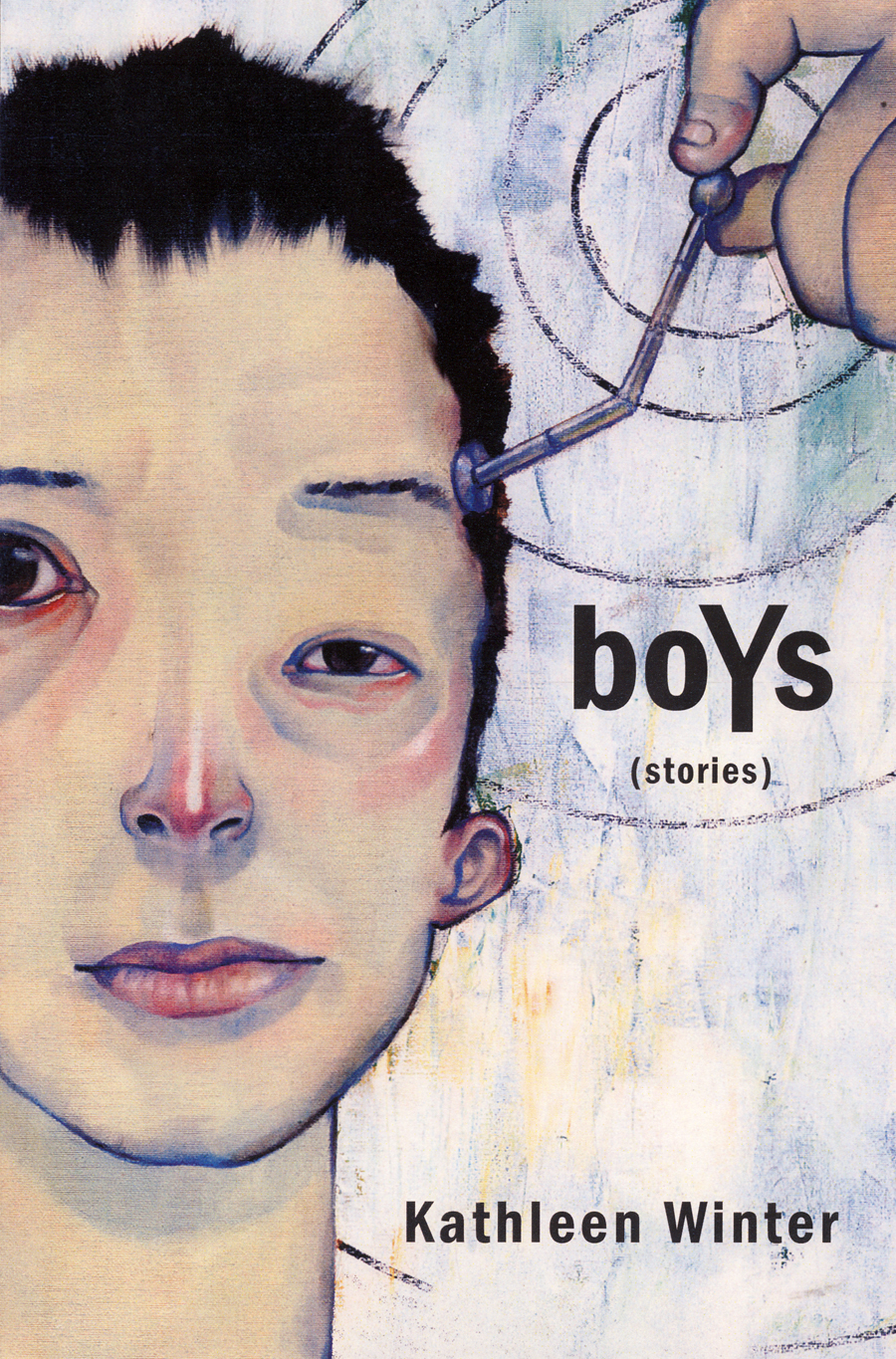
I don't think there is anything "small" about any of Biblioasis' 2007 titles, and I suspect Alana Wilcox or Andrew Steeves could say the same. Lorna Jackson's Cold-cocked, John Metcalf's Shut Up He Explained, Eric Ormsby's Time's Covenant, Kathleen Winter's boYs or Patricia Robertson's Goldfish Dancer -- just to name a few -- are as well designed, edited, copy-edited, written and produced as any book produced by a larger press in 2007. They are as good, in my opinion, as almost any other book produced in 2007. Some of these may prove, in time, to be more important than any of the books that have received award nods or Globe 100 inclusion (this is absolutely the case with Ormsby's Time's Covenant).

No excuses are offered or expected. Or necessary.

Friday, November 30, 2007

CNQ 72: The Best CNQ Ever?


CNQ has arrived and will be mailed out as soon as I finish this Canada Council grant. It's a fine issue, and may well be our best. Phil Marchand on the Problem with Alice Munro, Charles Foran's thoughts on growing up in Southwestern Ontario (Dumb as a Sack of Hammers), Iris Nowell on Painters Eleven wildman Tom Hodgson, David O'Rourke and Abe Tarasofksy on Irving Layton, a profile of Giller-longlisted (& fab short story writer) Sharon English, Clark Blaise on the short story, Perilous Trade Conversations with Atwood and Gibson, Andrew Steeves taking poetry design personally, poetry by Amanda Jernigan, plus reviews of Ondaatje, Munro, Crozier, Lee and others. And a Letters section! Plural! You love us! You really love us! (At least most of you do.)

Should be hitting mailboxes and newsstands across the country towards the end of next week or the beginning of the following.

Montreal Review of Books Review of Little Eurekas

A very good review of Robyn Sarah's Little Eurekas: A Decade's Thoughts on Poetry in the MRB. An excellent Christmas gift! You can buy it here:

www.biblioasis.com/product_info.php?cPath=21&products_id=57

or here:

www.chapters.indigo.ca/books/Little-Eurekas-Decades-Thoughts-Poetry-Robyn-Sarah/9781897231296-item.html?ref=Search+Books%3a+%2527little+eurekas+and+sarah%2527&sterm=little+eurekas%7csarah+-+Books

or even here:

www.amazon.ca/Little-Eurekas-Decades-Thoughts-Poetry/dp/1897231296/ref=pd_bbs_sr_1?ie=UTF8&s=books&qid=1196439505&sr=8-1


Yes, I know: so much for all I want for Christmas is 600 new subscriptions...

Oh yes, the review:

"If anybody had told me, years ago, that I would one day publish a book of literary criticism, I think I would have laughed out loud," a rather astounded Robin Sarah writes in her introduction to Little Eurekas. Yet here it is, a tidy collection of diverse writings gleaned from essays, columns, reviews, and collaborations, and arranged in a volume that is certainly substantial evidence of a literary life, among other things. Indeed, the volume "reflects personally upon a life in poetry" by one who has written, edited, taught, reviewed, published, and even typeset it manually. Rooted in the personal, Little Eurekas is unencumbered by any of the potentially daunting theory that typically characterizes the genre, and in this sense, one hesitates to categorize it as LitCrit proper. If Little Eurekas is literary criticism, then it is, as Sarah points out, certainly an unconventional contribution to the genre.

Organized into five parts, Little Eurekas is a friendly, even hospitable collection, and the conversational but sophisticated prose makes it all the more so. Part I offers a handful of essays ranging from Sarah's account of how, as a young girl, she fell for poetry, to a frank discussion of poetics in "Poetry's Bottom Line," to a thought-provoking trio on teaching, publishing, and editing poetry. In "I To My Perils: How I Fell for Poetry," Sarah describes poetry's insidious creep upon her: "No primal 'Eureka moment.' Many little Eurekas - some of them unconscious, smiting me after the fact." She goes on to say that "it is an addiction to the little Eurekas, those moments of electric response to a particular poem that makes one a reader of poetry." While this reviewer was not smitten with the title of the collection, the sentiment behind it - the exuberance, the joy, the electricity that poetry can yield - is certainly true enough.

Throughout the collection, Sarah shows herself to be a writer who, in the fullness of time, has developed particular ideas about things. She does not shirk from asking and answering thorny questions that probably should be asked by more writers but too often are not. Consider: "If poetry is a good thing, can there be too much of it?", or "What makes a poem a poem?" Nor does she hesitate to share her various gripes. For Sarah, all that ails poetry - the current cultural program, the overproduction of poetry that nobody reads or reviews, the poet as celebrity, creative writing training, less than stringent editing - seems to boil down to an abiding concern that quality over quantity be poetry's mantra. Whether or not one agrees with her opinions, Sarah demonstrates no small courage in laying her views out clearly and plainly.

Perhaps the best way to describe Little Eurekas is to say that it "Dances with Poems," for the collection is, by and large, comprised of Sarah's essays on, and reviews of, poetry. In the chapter of that name Sarah is clear: "Appreciation of poetry begins with poems." And true to her word, she is generous with quotation. Like a good dance partner, Sarah's engagement with poetry is attentive, considered, and at its best downright inspiring. Her collaborations (with Dennis Lee and Eric Ormsby among others), taken from interviews, symposia, and most interestingly letter exchanges, add yet another dimension to the dance.

This reviewer is not a poet, and Sarah might be heartened to know that Little Eurekas made her want to read more poetry; it made her pick up a dusty collection from her bookshelf; it made her send a poem to a friend who seemed to require just those particular words; and it made her want to seek out some more of the poems Sarah reviews. And is it not just these little moments of electric response - these little Eurekas - that make one a reader of poetry?
Brenda Cockfield is a Montreal writer.

Kathleen Winter's Eating the Bones online


A story from boYs, 'Eating the Bones,' can be found online on the Antigonish Review website, here:

http://www.antigonishreview.com/bi-135/135-fiction-kathleen-winter.html

You can buy the book here: www.biblioasis.com/product_info.php?products_id=61

or here:

www.chapters.indigo.ca/books/boYs-Kathleen-Winter/9781897231357-item.html?ref=Search+Books%3a+%2527boys+and+winter%2527

or even (yes, I'm holding my nose) here:

www.amazon.ca/boYs-Kathleen-Winter/dp/1897231350/ref=sr_1_15?ie=UTF8&s=books&qid=1196433468&sr=8-15

Christmas is coming, and I'm losing all sense of shame.

Thursday, November 29, 2007

CNQ Gift Subscription Offer

The following is a gift subscription offer made to CNQ subscribers, but I post it here in case any Thirsty readers might want to take advantage. If you give a gift subscription to two different individuals, we'll give you a subscription for the same period. And you'll save yourself at least a little time in a mall. Tell me, how much is that worth?

If you're interested, email me at biblioasis@yahoo.com, and I'll give you all the necessary info.

CNQ: Canadian Notes & Queries

“…it may be the best literary journal in the land.”

-John Fraser, Master of Massey College. The National Post

Dear Subscriber,

In the spirit of last-minute Christmas shopping, I am writing you today with a last minute Christmas offer. Like you, we’re a bit behind here: December’s just around the corner, CNQ 72 is in, waiting in the garage to be mailed; there are grants to do and subscriptions to renew. Like you, we do not have our icicle lights up yet, and our tree is still dusty in its box. Christmas spirit is in rather short supply, and the thought of hitting the mall and that crush of shoppers and their parcels isn’t helping either.

Besides, what do you get your friends and loved ones? If you’re like me, you’re finding it harder and harder to find that (near) perfect gift. $20-$30 doesn’t buy much these days, and little of any value. Another scented candle? A bundle of Mark’s Work Warehouse thermal socks? A bottle of wine in a gauzy negligee of a gift bag (complete with a bow?) A small brick of Marks & Spencer fruit cake? That’s about it. And nothing says I didn’t think about this at all like all of the above.

(Yes: I know. There are books. But bringing that up wouldn’t help my case now, would it?)

But a gift subscription to CNQ is different. Not only does it say you thought about it, it says you like to think (and let’s face it, gift giving is at least a little bit about the giver). And, just as importantly, it says that you think the giftee likes to think too. You’re saying that your friend or loved one cares about Canadian art, literature and culture, that they deserve so much more than the great aunt’s yearly subscription to Reader’s Digest or People; that art, literature and criticism are more important than crock pot recipes, fashion and celebrity gossip.

As a subscriber, you’ve seen how we’ve revamped and expanded and revitalized CNQ. You’ve had the chance to read Mike Barnes on Libraculture, Robyn Sarah on Publishing (Too Much) Poetry, Carmine Starnino on the noir-esque Karen Solie. We hope you’ll agree with Dennis Lee, who recently wrote to us about the magazine and said in part: “Bravissimo! Piece after piece has a wonderful mix of intelligence, maniacal caring, and (dare I say it?) generosity of spirit. Almost gives you hope for critical thought in this country.” You know about the passion and thoughtfulness (and the occasional typo). You’ve seen the love (& what is Christmas about, if not love?).

We also expect that you know others who might appreciate CNQ. Many of you are writers or editors or academics or librarians or booksellers or teachers; all of you are readers. We’re certain you know at least two like-minded souls out there who might just love to receive a subscription to CNQ. At present we have 300 paying subscribers, and about 100 newsstand readers. Even with government grants, it’s pretty difficult to sustain a magazine with these kind of numbers. And we simply refuse to believe that that’s all there are out there who care about Canadian art and literature. Even in a country of 35 million (and growing) the Aesthetic Underground must be larger than that.

Which is where you & this offer come in (& as with all holiday offers, there’s something in it for you):

Give a one-year gift subscription to two separate individuals for Christmas, and we’ll add a free year to your account. Give a two-year subscription to two separate recipients, and we’ll add two free years to your account. All gift subscriptions will come with a Christmas card letting your recipient know that this thoughtful gift came from you. (And if you’re one of those lifetime subscribers who hasn’t paid a cent since William Morley or Doug Fetherling ran the magazine (bah humbug) think about all the money you’ve saved. Certainly enough for two measly little gift subscriptions, don’t you think?)

All you have to do is fill in the enclosed form with the names and addresses and length of subscriptions for your gift subscriptions, and mail it back to us (with a cheque, of course). We’ll take care of the rest, starting the new subscriptions with issue 72. We’ll send a pretty card with your name on it. And, for these people on your Christmas list, at least, no trip to the mall will be necessary.

Think about it for a moment: if all 300 of our subscribers gave just two gift subscriptions this year, we’d go from being one of the smallest critical journals in the land to among the largest. We’d have a bit more security (though, alas, no dental). We’d be able to pay our writers more, and our editors something. Colour signatures for the art pieces? Perhaps one of those little water wheels so that we won’t risk glue poisoning? It’s enough to get me excited.

So sing along with me: All I want for Christmas is 600 new subscriptions, 600 new subscriptions, 600 new subscriptions …

Happy Holidays,

Dan

Wednesday, November 28, 2007

Kapuscinski and Translation at This Ain't the Rosedale / The Photography of Andre Kertesz


A few photos from the Kapuscinski I Wrote Stone/ Biblioasis International Translation Series Launch. I need to learn to take a better picture.

The event really was wonderful. Stephen Henighan gave an impassioned introduction on the need for translation, which I'll be posting here in the next day or two. Al Moritz read from the poetry of French surrealist Benjamin Peret. Goran Simic read two new prose poems, possibly from his upcoming Tattooed Land (hard to know, as I've not yet seen the ms). Diana Kuprel and Marek Kusiba did an exceptional job reading Kapuscinski's poems, both in Polish and in english. Diana's reading was superb. She quite skilled, eloquent, engaged, and gave I thought one of the best readings we've had at Biblioasis. Hopefully we'll get her out a few more times yet.

A good crowd of 60-70 people were in attendance. Leon Rooke showed up, and we announced the winner of the Metcalf-Rooke Award. The winner, Rebecca Rosenblum, was also in attendance. It was wonderful to be able to announce the award in a meaningful fashion with the winner present. It made the announcement more real and immediate.

It was also nice to meet Priscilla Uppal, who's made it to other Biblioasis events in the past, though I've never had the chance to meet her. Branko Gorjup was also present, as was Barry Callaghan, of Exile, though he left so damn fast I never got the chance to introduce myself.

Branko and Leon are the reason Biblioasis received the book. They suggested that Diana and Marek send it to us, after other presses turned it down, largely, I gather, because it was not a Canada Council eligible title. Dan and Charlie at This Ain't the Rosedale were gracious hosts, and kept the doors open late for us. I, alas, forgot my stash of remainders behind their counter, but perhaps will be able to pick them up the week after next, when I'm next in Toronto.

Spent the night at the GLadstone, which was nice, and the four hours before my train touring a few galleries with Tony Calzetta, a Windsor-born artist I've hooked up with through Metcalf, and someone I'm hoping to do a book on in the next couple of years. Hit a few gallery shows, most of which were disappointing. Though I did see the work of Dan Kennedy, a dada-ist influenced artist -- or so says his catalogue -- who merges 19th century typography, and freak show/travelling road show imagery in a rather surreal, powerful collage. I think his work would make excellent cover illustrations, and intend to search him out to see how interested he'd be in a project or two.

The highlight, however, was a photography exhibit, of the work of Andre Kertesz. I'd not heard of him before, though he was internationally renowned. This show was of his Polaroids, which goes to show that it's not the instrument but the man using it. The work was breathtaking, beautiful. Consisting mainly of still lifes, shots taken around his apartment, or through his window, the way he captured light, or honed in on an image was quite amazing. In the best of them there was a near abstract quality, where the object dissolved into light and colour and line. Kertesz started using the Polaroid camera late in life, in his mid-80s, when he was more and more confined to his house due to infirmity, and when he could no longer develop film in a darkroom due to vertigo.

The show runs at the Bulger Gallery on Queen St. until late December. I may head back when I'm in Toronto the week after next. If I had $4000, I'd have bought one of them. As it is, I really couldn't afford the book I purchased. But viewing them at the Bulger is free. I urge everyone who can to do so.